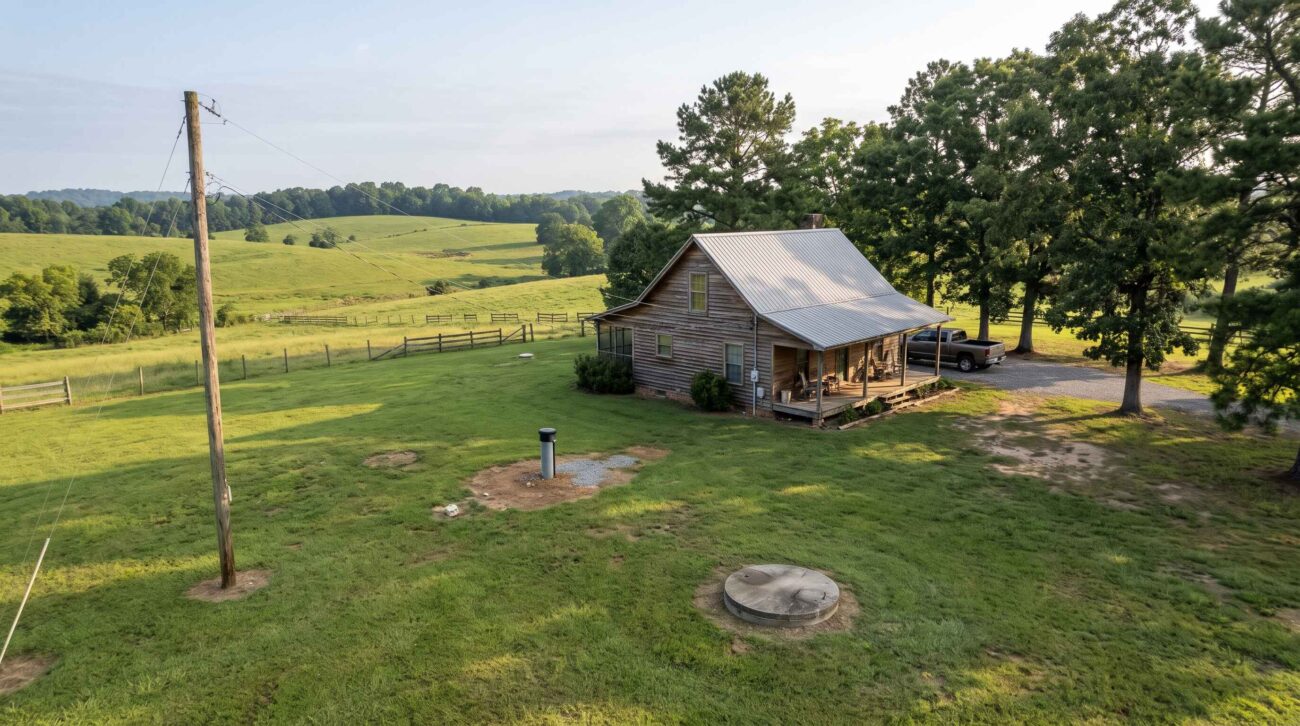
An EstatePath Educational Guide | Updated November 2026
A rural property may look affordable until you discover what it takes to make it usable. A cabin with no running water, a parcel that cannot support a conventional septic system, or land located far from an electrical distribution line can present substantial challenges after closing.
The most important question is not simply whether utilities are mentioned in the listing. It is whether the property has documented, functioning, legally permitted services that meet your intended use.
This guide explains how to investigate water, wastewater disposal, and electricity before buying rural land or a cabin in the United States. It includes the records to request, the professionals to contact, warning signs to recognize, and a practical checklist for comparing properties.
1. Start by Separating Utility Claims From Verified Facts
Real estate listings often use short descriptions that leave important questions unanswered.
| Listing description | What it does not necessarily prove |
|---|---|
| “Well on property” | That the well works, produces adequate water, or supplies safe drinking water |
| “Water available” | That a water connection exists or that connection costs are affordable |
| “Septic possible” | That the soil has passed testing or a permit will be issued |
| “Existing septic” | That the system is permitted, correctly sized, or functioning |
| “Electric nearby” | That the utility will connect service at a reasonable cost |
| “Off-grid ready” | That the site has an adequate solar, battery, or backup-power design |
| “Utilities at road” | That service lines extend to the proposed building location |
These phrases are starting points for investigation, not conclusions.
Before spending money on detailed inspections, request the property’s parcel identification number, legal description, survey if available, utility records, and any permits or inspection reports the seller possesses.
For a broader overview of purchasing rural land, read our step-by-step guide to buying rural land in the USA.
2. How to Verify a Private Well or Water Supply
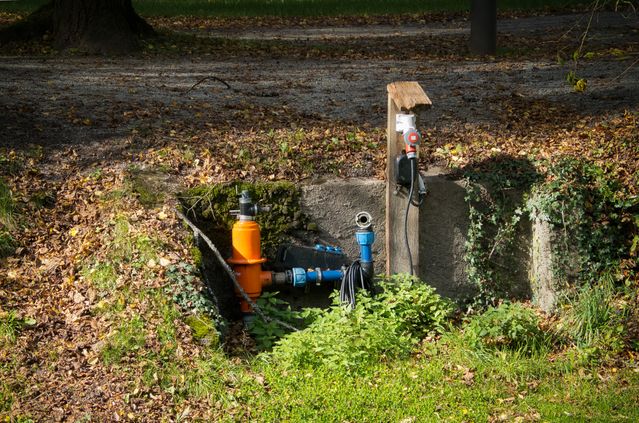
Many rural homes use private wells rather than municipal water systems. In most cases, the owner is responsible for testing and maintaining the water supply.
The U.S. Environmental Protection Agency explains that federal drinking-water regulations for public water systems generally do not apply to privately owned household wells. That makes independent verification especially important.
Source: EPA — Protect Your Home’s Water.
Step 1: Identify the Actual Water Source
Ask whether the property uses:
- A drilled, driven, or dug well
- A municipal or community water connection
- A shared well serving multiple properties
- A spring, cistern, hauled-water tank, or another alternative source
- No installed water system
These arrangements involve different ownership, reliability, treatment, and legal questions.
A pond, creek, or spring on the land does not automatically establish a legal or potable household water supply.
Step 2: Request Well Records
For an existing private well, ask for:
- Well drilling or completion records
- Installation date, depth, and available construction details
- Pump and pressure-system information
- Previous water-quality test results
- Well yield or pumping-test information, if available
- Repair, treatment, and maintenance records
- Any recorded easements for shared wells or pipes crossing neighboring land
Check with the state well-record database or local health department when records are missing.
A well can produce water during a brief faucet demonstration but still have inadequate recovery during sustained household use. Ask a qualified well contractor whether a yield or performance assessment is appropriate.
Step 3: Test the Water Before Closing
The Centers for Disease Control and Prevention recommends that private-well owners test at least annually for total coliform bacteria, nitrates, total dissolved solids, and pH. Additional testing depends on local geology, nearby land uses, and known contamination concerns.
Use a state-certified drinking-water laboratory and discuss the testing panel with the local health department.
Source: CDC — Guidelines for Testing Well Water.
For a purchase, arrange testing early enough to receive and evaluate the results before relevant contract deadlines.
Do not assume clear, odorless water is safe. Some contaminants cannot be identified by appearance, taste, or smell.
Step 4: Check Whether a New Well Is Feasible
If no well exists, contact local well drillers and the relevant permitting agency.
Ask about typical drilling depths nearby, known groundwater problems, permitting requirements, site access for drilling equipment, and what happens if drilling does not produce adequate water.
Nearby wells may offer useful clues, but they do not guarantee water quantity or quality on the parcel being purchased.
Water red flag: A listing advertises “water available,” but the seller cannot identify a functioning connection, a documented well, or a practical plan for obtaining water.
3. How to Verify an Existing Septic System
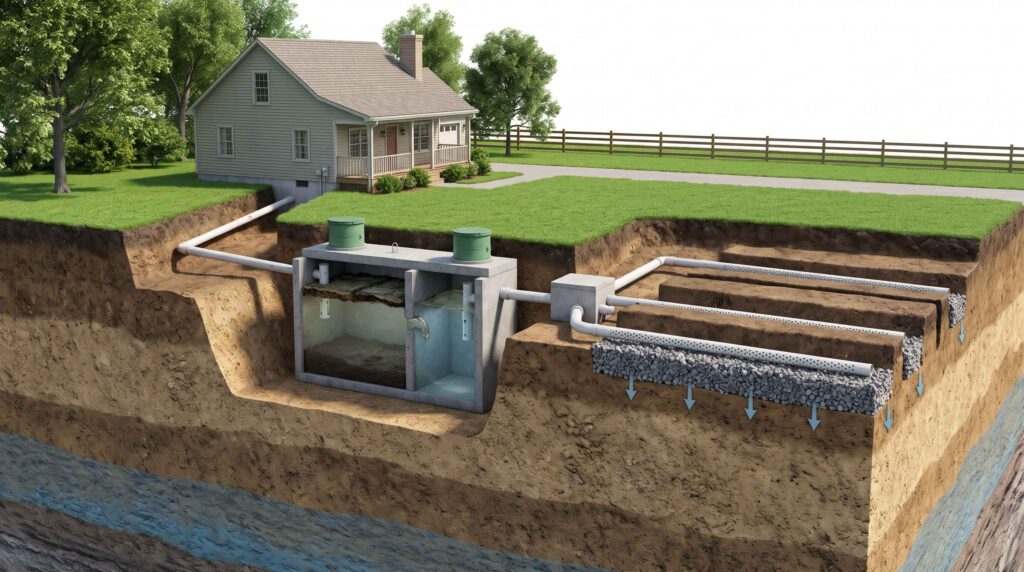
A septic system collects and treats wastewater from household plumbing. It usually includes a septic tank and a soil-based treatment area, often called a drainfield.
The EPA recommends reviewing system records and arranging an appropriate inspection when buying a home with a septic system. Septic permitting and oversight are primarily handled under state and local requirements, which vary by location.
Source: EPA — Frequently Asked Questions on Septic Systems.
Step 1: Request the Septic Permit and Site Plan
Ask the seller or local permitting office for:
- Original installation permit
- Approved system design or site plan
- Installation or final inspection records
- Tank and drainfield locations
- Design capacity and approved number of bedrooms, where applicable
- Pumping, repair, and maintenance records
An old system may have been designed for a smaller dwelling or a different level of use.
A property listing that identifies a cabin as having one bedroom does not establish that its wastewater system is suitable for a larger future home.
Step 2: Hire a Qualified Septic Inspector
A general home inspection may not provide a complete septic evaluation.
Ask an appropriately qualified inspector to assess the accessible components, review records, identify signs of leakage or backup, and evaluate the drainfield where feasible.
Potential warning signs include sewage odors, slow drains, recurring backups, unusually wet ground, or a history of emergency pumping.
However, the absence of visible symptoms does not prove that the system is sound.
Step 3: Confirm the System’s Legal Status
Ask the local health or environmental department:
- Is there a permit on file?
- Does the permitted system match the current building?
- Are there unresolved violations or repair orders?
- Is an inspection required at property transfer?
- Would the intended renovation or expansion require a new permit?
Rules differ significantly among states, counties, and municipalities.
Septic red flag: A seller says a system exists, but no one can locate its drainfield or produce records, and its condition has not been professionally assessed.
4. What If the Property Has No Septic System?
Vacant rural land and rustic cabins sometimes have no approved wastewater system.
In that situation, buyers must investigate whether the land can support an approved solution before assuming a house can be built.
Soil and Site Evaluation
A local health department or authorized professional may evaluate:
- Soil characteristics and drainage
- Depth to groundwater or restrictive layers
- Slope and usable space
- Setbacks from wells, waterways, property lines, and buildings
- Space for a replacement or reserve drainfield
- The intended number of bedrooms and wastewater flow
Depending on the jurisdiction, the process may involve soil borings, test pits, percolation testing, or other site assessments.
A successful test on a neighboring property does not establish that your parcel will qualify.
Conventional Versus Alternative Systems
Some parcels may qualify for a conventional septic system. Others may require an engineered or alternative system, additional maintenance, or may not qualify for the buyer’s intended residential use.
Do not assume a composting toilet eliminates wastewater permitting requirements. Greywater from sinks, showers, and laundry may still require approved management.
Before closing: Ask the permitting authority what approval is required for your proposed use and whether a purchase contingency for satisfactory wastewater feasibility is appropriate.
For a related example, see our $149,900 Michigan log cabin on 40 acres buyer analysis, which examines a listing reporting no water or sewer service.
5. How to Verify Electricity Availability
Electric service is often misunderstood because a visible utility pole is not the same as an approved, affordable connection.
A rural property may have power along the public road while the preferred building site is hundreds or thousands of feet away.
Step 1: Identify the Serving Utility
Find the electric utility or rural electric cooperative responsible for the parcel.
Ask the seller for previous utility bills or account information if the property has been connected before.
If the listing says electricity is installed, verify that the service is active or can be reactivated and ask whether the meter, panel, wiring, and connection are suitable for the intended use.
Step 2: Request a Written Service-Availability Review
Contact the utility with the parcel number, address, map, and proposed building location.
Ask:
- Does the utility serve this parcel?
- Where is the nearest connection point?
- Is sufficient capacity available?
- Will new poles, transformers, or line extensions be required?
- Who pays for the extension and associated work?
- Are easements or vegetation clearing required?
- What is the estimated installation timeline?
- What portion of the work must be completed by a licensed electrician?
Ask for a written estimate when possible. A verbal statement that electricity is “close” is not a reliable project budget.
Step 3: Distinguish Existing Service From Usable Service
A cabin with a connected electrical panel may still need work before it can support a modern residence.
For example, a buyer planning electric heating, a well pump, workshop equipment, or vehicle charging may have different needs from someone using a cabin only for occasional weekends.
Have a licensed electrician assess the existing installation and any proposed upgrades.
Why Line Extensions Matter
The cost of bringing power to remote land depends on terrain, distance, equipment, utility policy, easements, and construction requirements.
USDA Rural Development program materials illustrate that extensions in remote, difficult terrain can be expensive, but those project examples should not be treated as universal per-mile prices.
The only dependable estimate for a specific parcel is one prepared by the serving utility or its authorized contractors.
6. What About Solar and Off-Grid Power?
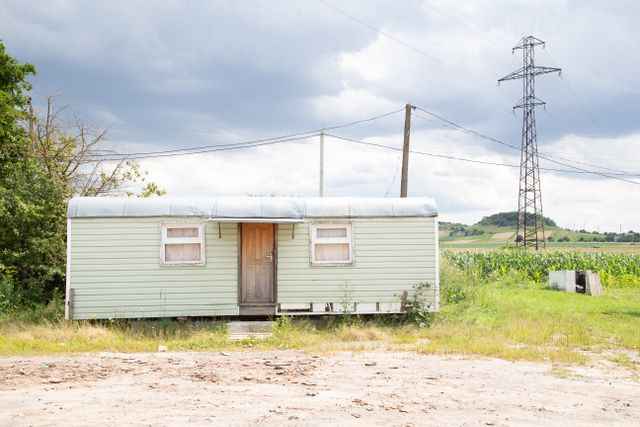
Solar panels, batteries, generators, and propane appliances can be practical options for some remote properties.
But an off-grid setup should be designed around actual energy needs, seasonal conditions, and reliability requirements.
A realistic assessment includes:
- Expected daily electricity consumption
- Well-pump starting loads and other high-demand appliances
- Winter sunlight and tree shading
- Battery storage needs
- Generator fuel availability and maintenance
- Heating and cooking arrangements
- Equipment installation, electrical safety, and local permitting
A property described as “off-grid ready” may simply mean it lacks grid electricity.
For a year-round home, winter heating, refrigeration, water pumping, and backup power require more careful planning than a small weekend cabin.
An off-grid power system also does not solve water availability or wastewater disposal.
7. A Practical Comparison: Three Rural Property Scenarios
The following examples are illustrative scenarios, not verified property listings or contractor quotes.
| Scenario | Water | Wastewater | Electricity | Main buyer concern |
|---|---|---|---|---|
| Cabin A | Existing well, recent test unavailable | Permitted septic, condition unknown | Active grid service | Inspect and verify existing systems |
| Land B | No well | No septic approval | Power at nearby road | Feasibility and installation costs |
| Cabin C | Hauled water tank | No documented wastewater system | Solar and generator | Year-round usability and compliance |
Cabin A may require less new infrastructure than Land B, but it is not automatically a safer purchase. A failed septic system or contaminated well can still be a major expense.
Cabin C may suit limited recreational use, yet the buyer must verify whether its current arrangement is permitted and whether the property can legally support the intended occupancy.
The lesson: Compare documented infrastructure, not just listing prices or attractive acreage.
8. Build a Property-Specific Utility Budget
Instead of relying on generic national installation averages, build a budget from local estimates.
Use this worksheet:
| Expense | Evidence to obtain |
|---|---|
| Water testing | Certified laboratory quote |
| Existing well inspection | Qualified well contractor estimate |
| New well | Local driller’s written estimate and permit information |
| Septic inspection | Qualified inspector quote |
| Soil/site evaluation | Health department requirements and evaluator quote |
| New septic system | Site-specific contractor or engineer estimate |
| Electric connection | Serving utility’s written estimate |
| Internal electrical work | Licensed electrician’s quote |
| Solar and backup power | Site-specific system design and installation quote |
| Permits and site work | Written agency fees and contractor estimates |
Add a contingency for unknown conditions, but do not use a contingency as a substitute for determining whether a project is legally and physically feasible.
If utility costs materially change the purchase decision, consider discussing inspection and feasibility contingencies with your real estate professional or attorney before signing a binding agreement.
For additional expenses beyond the advertised purchase price, read 7 Hidden Costs of Buying Cheap Land in America.
9. Who Should You Contact Before Buying?
| Question | Best starting point |
|---|---|
| Is a private well documented? | State well-record program or local health department |
| Is well water safe? | State-certified drinking-water laboratory |
| Can a new well be drilled? | Permitting agency and qualified well driller |
| Is the septic system permitted? | Local health or environmental department |
| Can the land support a new septic system? | Local permitting authority and qualified site evaluator |
| Can electricity be connected? | Serving electric utility or cooperative |
| Is existing electrical work safe? | Licensed electrician |
| Can the property be used as intended? | Local zoning and building departments |
| Are utility easements recorded? | Title company, county land records, or real estate attorney |
The exact agency structure varies by location. Some counties handle these questions directly, while others rely on regional or state offices.
10. Rural Property Utilities Checklist Before Closing
Use this checklist during due diligence.
Water
- Confirm the property’s actual water source.
- Obtain well records or connection documentation.
- Test private well water through a certified laboratory.
- Evaluate well performance and equipment condition.
- Verify shared-water rights and recorded easements, if relevant.
- Investigate feasibility if no reliable water source exists.
Septic and Wastewater
- Obtain existing septic permits and plans.
- Locate the tank and drainfield.
- Arrange an appropriate professional inspection.
- Check system capacity for the intended use.
- Verify site suitability if a new system is needed.
- Confirm local rules for alternative toilets and greywater.
Electricity
- Identify the serving utility.
- Confirm whether existing service is active and usable.
- Request a written connection or extension estimate.
- Identify any required easements or electrical upgrades.
- Assess off-grid equipment and backup power where relevant.
Final Decision
- Collect written estimates rather than relying on verbal promises.
- Check permit requirements and contract deadlines.
- Confirm the proposed residential or recreational use is allowed.
- Review utility findings alongside access, zoning, and building conditions.
- Resolve material uncertainties before the purchase becomes final.
Frequently Asked Questions
Can I buy rural land without water or electricity?
Yes, in many places, but ownership does not guarantee that a residence can be built or occupied. Verify local land-use rules, water availability, wastewater requirements, and the intended use before buying.
Does a property need a perc test before I can build?
Not necessarily a test with that exact name. Local authorities may require a soil or site evaluation using methods appropriate to their regulations. Ask the permitting office what is required for the specific parcel.
Is a private well automatically safe to drink from?
No. A functioning well does not prove that the water is safe. Use a certified laboratory and obtain guidance on appropriate contaminants to test.
Can I install a composting toilet instead of a septic system?
Possibly, depending on local regulations and the property’s intended use. Other wastewater, including sink and shower discharge, may still need an approved disposal system.
Does electricity at the property line mean a cheap connection?
No. Connection costs can include utility extensions, transformers, poles, trenching, easements, meters, and private electrical work. Request a property-specific estimate.
Is an off-grid cabin easier to buy than a conventional home?
Not necessarily. Off-grid properties can offer independence and privacy, but buyers must evaluate water, wastewater, energy storage, seasonal access, maintenance, and legal occupancy.
Final Thoughts
A rural property’s utility situation can determine whether it is a practical purchase, a costly improvement project, or land that cannot support the buyer’s plans.
Before buying, verify three separate questions:
Water: Is there a reliable, legal, and appropriately tested supply?
Wastewater: Is there an approved, functioning system—or a documented path to installing one?
Electricity: Is usable service already present, or is there a realistic, budgeted alternative?
The strongest purchase decision is based on permits, tests, inspections, and written estimates—not assumptions drawn from listing descriptions.
Official Research Resources
- U.S. Environmental Protection Agency — Protect Your Home’s Water
- Centers for Disease Control and Prevention — Guidelines for Testing Well Water
- U.S. Environmental Protection Agency — Septic System FAQs
- Michigan District Health Department #10 — Residential Well & Septic
- USDA Natural Resources Conservation Service — Web Soil Survey
Editorial note: This article provides general educational information for U.S. rural property buyers. Utility conditions, permits, regulations, and costs vary by property and jurisdiction. It is not engineering, environmental, legal, or financial advice. Consult qualified local professionals and agencies before making purchase or construction decisions.
