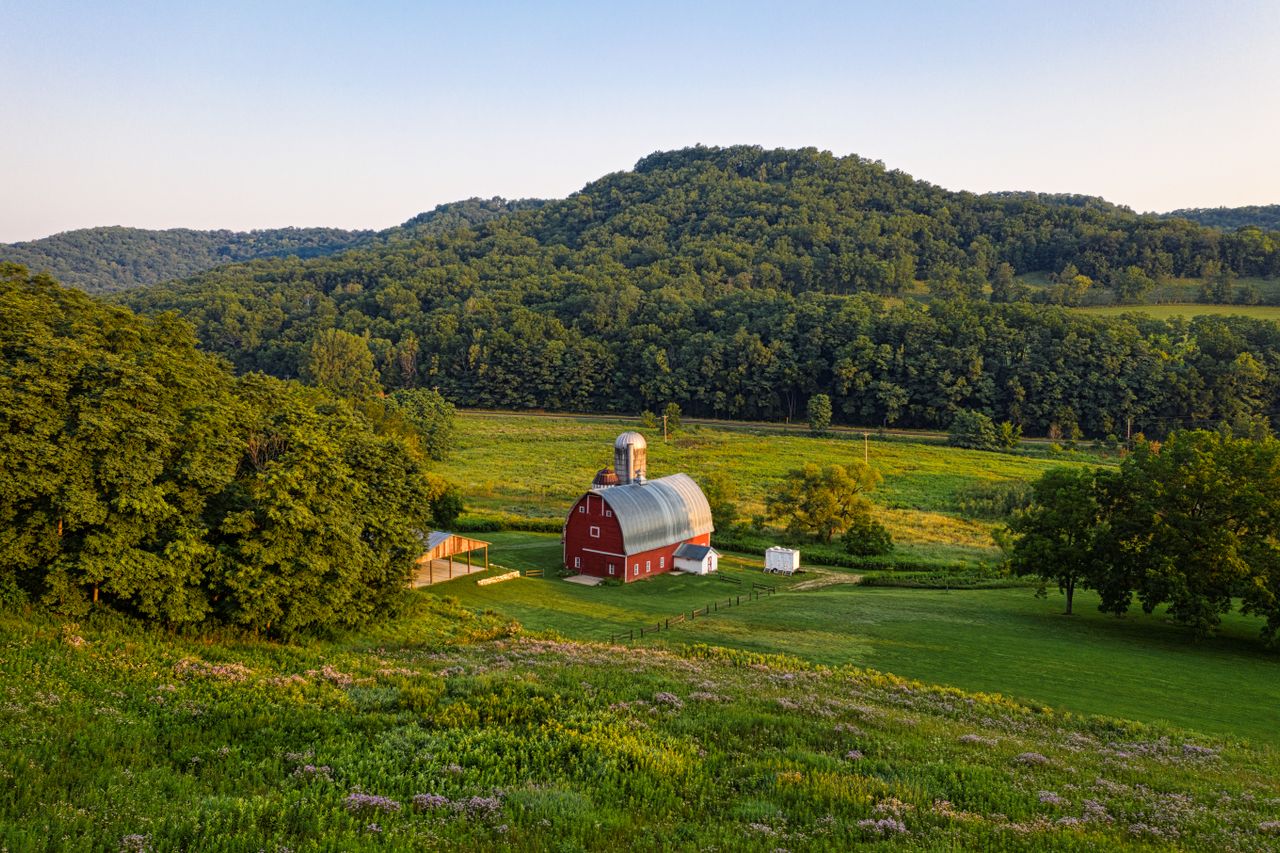
Buying rural land in the United States can open the door to building a country home, creating a homestead, establishing a weekend retreat, or simply owning a private piece of the countryside.
But purchasing undeveloped land is different from buying a traditional house.
A property may offer beautiful mountain views, 20 wooded acres, and an attractive asking price while lacking legal road access, a suitable septic location, or permission to build the home you want.
The most important question isn’t simply how much land you can afford. It’s whether that land can legally, physically, and financially support your plans.
This guide explains how to research rural property, investigate common risks, estimate ownership costs, and prepare for closing.
Step 1: Decide What You Want to Do With the Land
Before browsing rural properties, identify your primary purpose.
Common reasons for buying rural land include:
- Building a permanent residence
- Creating an off-grid homestead
- Purchasing recreational or hunting acreage
- Establishing a small farm
- Building a weekend cabin
- Holding undeveloped land for future use
Your intended use determines which properties are worth considering.
For example, wooded acreage suitable for seasonal hunting may not be appropriate for a full-time residence. A property that supports agricultural activities may still have restrictions on residential construction.
Create a list of non-negotiable requirements before contacting sellers.
Consider road access, electricity, water availability, distance from essential services, terrain, and local land-use regulations.
A useful approach is to separate your requirements into three categories:
| Essential | Preferred | Optional |
|---|---|---|
| Legal access | Mountain views | Existing shed |
| Permitted intended use | Creek frontage | Mature fruit trees |
| Suitable water solution | Forest privacy | Fenced boundaries |
| Affordable total cost | Nearby town | Existing driveway |
This helps prevent an attractive listing photograph from distracting you from serious limitations.
Step 2: Choose a State and Research Local Land Rules
Rural land regulations vary significantly across the United States.
A property in rural Kentucky may be subject to different building requirements, subdivision rules, and septic regulations than one in Colorado or Montana.
Even neighboring counties can have different requirements.
Before committing to a property, contact the relevant county planning, zoning, building, and environmental health departments.
Ask:
- Is residential construction permitted on this parcel?
- What are the minimum lot size and setback requirements?
- Are manufactured homes, tiny homes, or recreational vehicles allowed?
- Are there restrictions on camping or long-term RV occupancy?
- What permits are required for wells and septic systems?
- Are there recorded subdivision restrictions or homeowners association rules?
Do not assume that a listing described as “unrestricted” is completely free from regulations.
An unrestricted property listing is a marketing description, not a substitute for legal verification.
Request written confirmation when possible and retain copies of relevant regulations or correspondence.
Step 3: Search for Properties and Verify the Listing Information
Real estate websites can help identify available rural land, but the listing should be treated as a starting point.
Useful search criteria include:
- Asking price
- Acreage
- County and state
- Property type
- Road frontage
- Water features
- Terrain
- Existing structures
- Utility availability
When a promising property appears, record its parcel identification number, also called an assessor’s parcel number or tax parcel ID in many jurisdictions.
Use that information to locate the property through the county assessor or GIS mapping system.
Compare the listing with available public records.
Pay particular attention to acreage, property boundaries, existing structures, assessed improvements, and recorded ownership information.
Online mapping systems are useful research tools, but they are not substitutes for a professional boundary survey.
Why the Parcel Number Matters
Street addresses are not always available for undeveloped land.
A parcel number can help identify the property in tax records, county maps, and other local government databases.
However, parcel numbers and mapping conventions differ by jurisdiction, and a tax parcel is not always identical to the legal description of the land being conveyed.
Step 4: Confirm Legal and Physical Road Access
Road access is one of the most important issues in rural property purchases.
A parcel may appear accessible on satellite imagery without having an enforceable legal right to use the road.
There are two separate questions:
Legal access: Does the property have a recorded, enforceable right to reach a public road?
Physical access: Can an ordinary vehicle safely reach the property throughout the year?
These are not the same.
A parcel might have a recorded easement across neighboring land but still require significant road construction.
Alternatively, a visible dirt road may cross private property without a documented right of access.
Ask the seller or title company for:
- Recorded easements
- Road maintenance agreements
- Access-related deed provisions
- Available surveys
- Information about private-road ownership
- Any known access disputes
Visit the property when conditions allow, and investigate seasonal limitations.
A road that is easy to drive in summer may become difficult during heavy rain or winter snow.
EstatePath Buyer Tip: Never rely solely on a real estate map or a seller’s verbal assurance that access is guaranteed. Have the access documents reviewed by a qualified local professional.
Step 5: Investigate Water, Electricity, and Wastewater
Cheap rural land can become expensive when essential infrastructure is missing.
Before purchasing, determine whether the property has usable utility connections or whether new systems must be installed.
Water Supply
Possible water sources include municipal water, private wells, shared wells, or other legally permitted systems.
For a private well, investigate:
- Existing well permits and records
- Well depth and reported production
- Water quality testing
- Pump and pressure-system condition
- Local groundwater availability
- Applicable water rights
A creek or pond does not automatically provide a legal or reliable household water supply.
Water rights and withdrawal restrictions can be particularly important in parts of the western United States.
Septic and Wastewater
Many rural properties are not connected to municipal sewer systems.
They may require an approved onsite wastewater treatment system.
Before assuming that a parcel is buildable, contact the local health department about soil evaluations, septic permits, and available system designs.
If an existing septic system is present, arrange an appropriate inspection and review available maintenance and permit records.
Electricity
Contact the local electric utility directly.
Ask whether service is available, how far the nearest connection is from the proposed building location, and whether an engineering assessment is necessary.
Do not assume that nearby power lines guarantee an inexpensive connection.
Off-grid solar power may be an option, but system size, battery storage, backup power, maintenance, and installation costs need separate evaluation.
Step 6: Examine Soil, Terrain, and Flood Risk
Two properties with identical acreage can have dramatically different development potential.
A level, well-drained parcel may offer more practical building options than a steep property with unstable slopes or seasonal wetlands.
Research the Soil
The USDA Natural Resources Conservation Service provides the Web Soil Survey, a free resource for exploring soil characteristics.
It can help identify potential limitations related to drainage, soil depth, and land-use suitability.
However, soil mapping is a screening tool, not a replacement for an onsite geotechnical investigation or a septic evaluation.
Check Flood Exposure
Use FEMA’s Flood Map Service Center to investigate mapped flood hazards.
Remember that flood risk can exist outside mapped high-risk zones.
For creekside properties, also consider erosion, drainage, historic flooding, and access-road vulnerability.
Evaluate the Terrain
Steep slopes can increase the complexity of driveway construction, excavation, erosion control, and foundation design.
Visit the site with appropriate professionals before relying on a potential building location.
Step 7: Review Title, Boundaries, and Property Restrictions
Before closing, verify what the seller can legally convey.
A title company or qualified real estate attorney can help identify recorded issues that may affect ownership or intended use.
Important subjects include:
- Existing liens or judgments
- Easements
- Boundary disputes
- Recorded covenants
- Mineral rights
- Timber rights
- Shared access agreements
- Outstanding property taxes
In some regions, mineral or other subsurface rights may have been separated from surface ownership.
Do not assume that purchasing the land automatically transfers every associated right.
A professional survey may also be appropriate, particularly where boundaries are unclear, fences appear inconsistent with records, or construction is planned near a property line.
Step 8: Calculate the True Cost of Buying Rural Land
The advertised price is only one part of the purchase.
Consider this hypothetical example:
| Expense | Illustrative Amount |
|---|---|
| Land purchase price | $60,000 |
| Closing and title expenses | $2,000 |
| Survey allowance | $2,500 |
| Initial driveway work | $5,000 |
| Well installation allowance | $12,000 |
| Septic installation allowance | $10,000 |
| Electrical connection allowance | $8,000 |
| Illustrative total | $99,500 |
These numbers are fictional planning assumptions, not national averages, contractor quotes, or estimates for a particular property.
Actual costs can vary substantially based on location, terrain, contractor availability, permitting requirements, and system design.
The example also excludes a home, land clearing beyond the driveway, financing costs, ongoing taxes, insurance, and unexpected expenses.
The lesson is that a $60,000 land purchase could require a much larger overall budget before it becomes usable for your intended purpose.
Obtain location-specific written estimates rather than relying on generic online cost figures.
Step 9: Understand Financing Options
Financing vacant land can be different from financing an existing home.
Potential options include:
- Cash purchase
- Vacant-land loans
- Improved-land loans
- Construction financing
- Seller financing
- Certain agricultural or rural development programs, where eligible
Loan availability, down payments, interest rates, and underwriting requirements depend on the lender, property characteristics, borrower qualifications, and intended use.
Not every rural property qualifies for a government-backed loan program.
Before making an offer, speak with lenders experienced in the relevant type of rural property.
Ask whether financing depends on legal access, utility availability, appraisal results, or the intended construction timeline.
Step 10: Make an Offer With Appropriate Protections
Once you identify a suitable property, work with a knowledgeable real estate professional or attorney to prepare an offer.
Depending on the jurisdiction and transaction, consider contingencies addressing:
- Satisfactory title review
- Legal access
- Boundary survey
- Financing
- Soil and septic feasibility
- Water availability
- Permits and zoning
- Environmental concerns
- Property inspections
Contingencies must be negotiated and properly documented. Their availability and legal effect vary by state and contract.
Avoid waiving important due diligence protections simply because a parcel appears inexpensive.
A low asking price cannot compensate for land that cannot support your intended use.
Step 11: Complete Due Diligence Before Closing
Use the contract’s due diligence period to investigate unresolved questions.
Do not rely exclusively on online research.
When appropriate, hire a licensed surveyor, septic professional, well specialist, engineer, inspector, or real estate attorney.
Confirm the final legal description, title conditions, access rights, taxes, closing expenses, and any contractual obligations.
If a critical issue cannot be resolved, review your options under the purchase agreement with your professional advisers before the relevant deadlines.
Rural Land Buyer Checklist
Use this checklist before committing to a purchase.
Property Identification
- Confirm the parcel number and legal description.
- Compare the advertised acreage with available records.
- Review the county GIS map.
- Investigate boundary uncertainties.
Legal and Land-Use Checks
- Verify legal road access.
- Review easements and deed restrictions.
- Confirm intended use with the relevant authorities.
- Investigate mineral and other reserved rights.
- Review available title information.
Physical Property Checks
- Visit the property.
- Evaluate terrain and drainage.
- Check FEMA flood information.
- Review USDA soil information.
- Investigate seasonal road conditions.
Infrastructure Checks
- Confirm water availability and applicable rights.
- Investigate septic feasibility.
- Obtain an electricity connection assessment.
- Evaluate internet and mobile coverage.
- Obtain written contractor estimates.
Financial and Closing Checks
- Review property taxes.
- Investigate insurance availability.
- Confirm financing terms.
- Budget for infrastructure and contingencies.
- Complete inspections and contract due diligence.
Five Common Rural Land Buying Mistakes
1. Assuming Every Acre Is Buildable
Wetlands, steep slopes, setbacks, easements, and unsuitable soils can reduce usable building space.
2. Confusing Road Visibility With Legal Access
A road visible in satellite imagery does not establish the legal right to use it.
3. Underestimating Utility Costs
A low-priced parcel can require substantial investment in water, wastewater, power, and road infrastructure.
4. Trusting Broad Marketing Descriptions
Terms such as “unrestricted,” “ready to build,” or “off-grid paradise” should be independently verified.
5. Skipping Professional Due Diligence
A professional inspection, survey, or legal review may uncover problems that photographs and online maps cannot reveal.
Final Thoughts: Buy Land Based on Usability, Not Just Acreage
Buying rural land in America can be rewarding, but successful purchases require more than finding an attractive price.
Start with your intended use. Verify legal access and land-use permissions. Investigate utilities, soils, flood exposure, and property rights. Then calculate the full cost of making the property usable.
The best rural property for you is not necessarily the one with the most acres. It is the one that can realistically support your plans within your budget and acceptable level of risk.
At EstatePath, we encourage buyers to approach rural real estate with curiosity, independent research, and careful due diligence.
Frequently Asked Questions
Can you buy rural land without building a house?
Generally, yes. However, ownership and permitted activities are separate issues. Local rules may restrict camping, RV occupancy, agricultural uses, storage, or future construction.
Is buying vacant land cheaper than buying a house?
The initial purchase price may be lower, but infrastructure, construction, financing, and maintenance can significantly increase the overall cost.
Can you build an off-grid cabin anywhere in the United States?
No. Zoning, building codes, wastewater rules, water rights, and other regulations may limit or prohibit a proposed off-grid dwelling.
Do you need a survey before buying rural land?
Not every transaction legally requires a new survey, but one may be advisable or required by a lender, title insurer, or other party. A qualified local professional can help determine whether an existing survey is adequate.
How can you tell if rural land is suitable for a septic system?
Contact the local permitting authority and arrange any required site or soil evaluations. Online soil maps alone cannot establish septic approval.
Is creek frontage a guarantee of water rights?
No. Ownership of creekside land does not automatically establish unrestricted rights to withdraw or use the water.
Official Research Resources
These public resources can help buyers begin their research. They do not replace parcel-specific professional evaluations.
- USDA Natural Resources Conservation Service — Web Soil Survey: https://www.nrcs.usda.gov/resources/data-and-reports/web-soil-survey
- U.S. Environmental Protection Agency — New Homebuyer’s Guide to Septic Systems: https://www.epa.gov/septic/new-homebuyers-brochure-and-guide-septic-systems
- U.S. Geological Survey — Water Data: https://waterdata.usgs.gov/
- Bureau of Land Management — Cadastral Survey Tools: https://www.blm.gov/programs/lands-and-realty/cadastral-survey/cadastral-tools
For zoning, parcel boundaries, taxes, permits, and recorded property documents, consult the relevant county and state government offices.
Editorial note: This guide provides general educational information about rural land purchases in the United States. It is not legal, financial, engineering, environmental, or real estate advice. Requirements vary by jurisdiction and individual property. Consult qualified local professionals before making a purchase decision.
